
Electrical Engineering
Carbon 3D printing has become one of the most useful tools for supporting electrical engineering projects at Sherpa Design. Instead of waiting days or weeks for parts, we can quickly turn around components for instant validation and feedback.
We leverage a variety of Carbon’s two-part resins and Loctite 3D’s one-part resins for electrical engineering applications. They offer a diverse set of mechanical properties including high temperature resistance, electrostatic dissipative properties (ESD), and flame retardancy up to V-0.
One-part resin, also known as single cure resin, is great for quick prototypes and short-term use parts. The materials typically do not require a long thermal cure, which shortens turn around times and minimizes labor. The resin is reclaimable, making it a cost-effective option for low-quality orders.
Two-part resin, also known as dual cure resin, is great for production runs and long-term use parts. The material has an additional thermal curing step that improves overall mechanical properties and longevity of the material. The resins are available in bulk packing, making it cost effective for high-quantity orders.
Below is a breakdown of the materials we use frequently along with some of most successful applications.
Loctite 3D IND 147
Loctite 3D IND 147 is a rigid resin designed for tooling and molding applications, due to its high heat deflection temperature of 290°C at 0.455MPa and high tensile modulus of 3190MPa. It is a one-part resin, which means processing times are quick; helping our team rapidly iterate. The combination of high stiffness and ease of processing allows us to make small features and thin walls.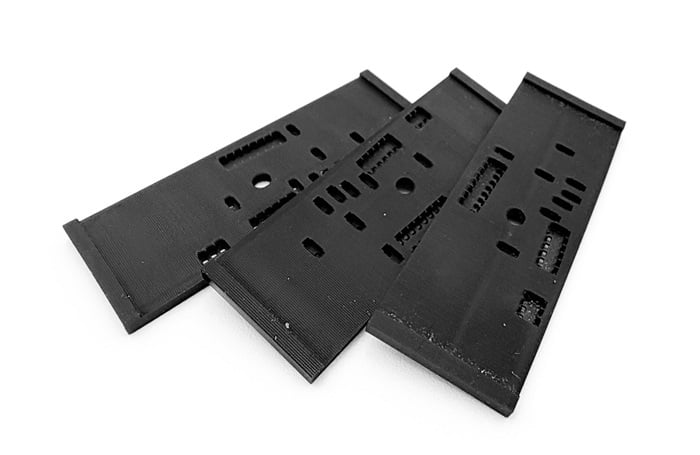 SMT soldering fixtures with fine-pinch component placement.
Sherpa Design’s electrical engineering team uses Loctite 3D IND 147 for short-term SMT soldering fixtures. Very small geometries can be created to allow precise fine-pitch component placement (< 1mm inter-component placements). The material's expansion and contraction remain stable during the reflow cycle. The fixtures withstand multiple solder operations at lead-free (SAC305) temperatures in excess of five minutes per usage without failure.
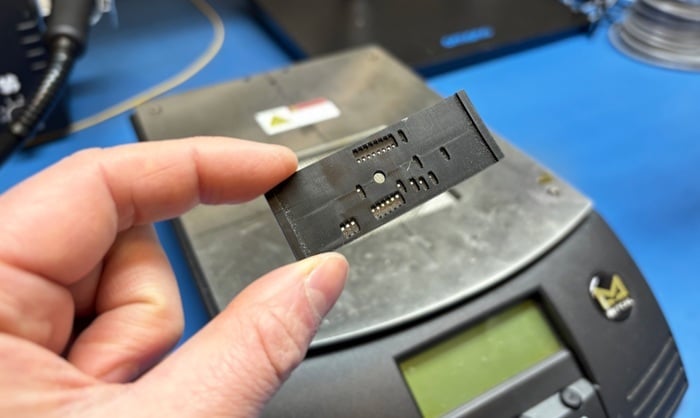 The fixtures were cycled through a board preheater.
| Apply solder paste to each PCB pad via pneumatic dispenser and syringe with fine tip |
| Manually insert each test point into the Loctite fixture |
| Place PCB onto fixture and attach lock-down nut |
| Place on PCB pre-heater, adding an aluminum "lid" over the top to contain heat |
| Run through the profile. If the solder does not melt, repeat steps 4-5. |
Loctite 3D IND 3380
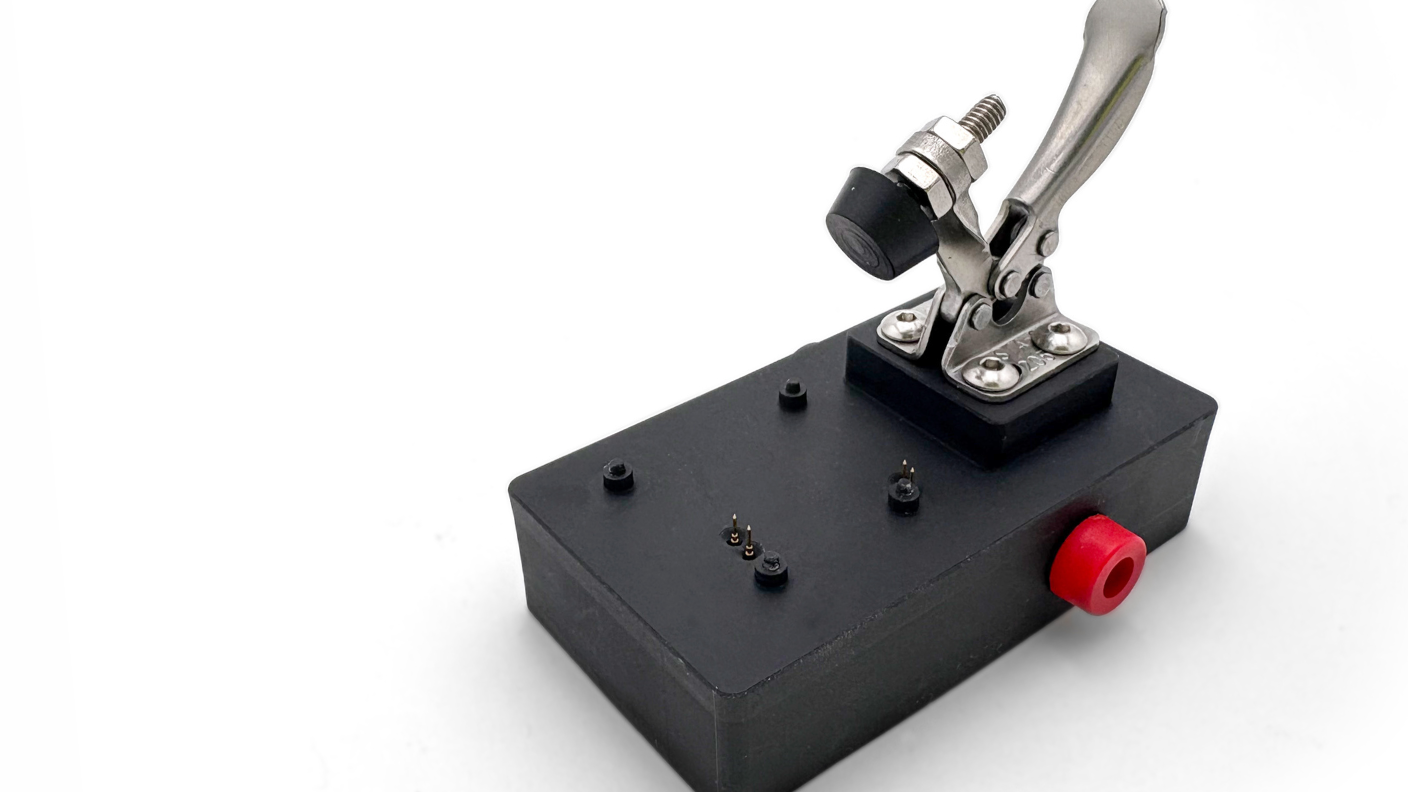
Loctite 3D IND 3380 material has electrostatic dissipative (ESD) properties with smooth surface finish, accuracy, and exceptional chemical resistance. This makes it an excellent choice for jigs, fixtures, and electronics manufacturing. Its unique properties also make it a dependable option for a wide range of tooling applications, providing versatile solutions to meet diverse manufacturing requirements. It is a one-part resin which means processing times are quick; helping our team rapidly iterate.
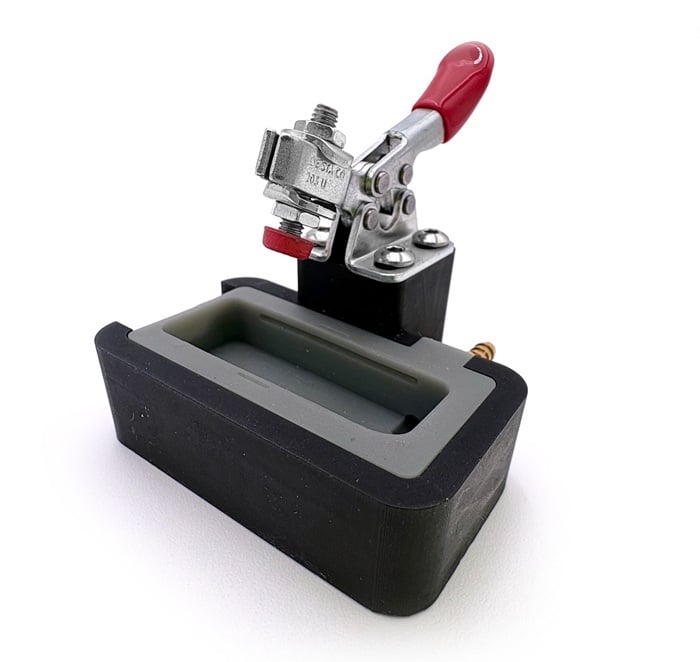 Vacuum fixture for testing hermetic seals.
Sherpa Design’s electrical engineering team uses this material for PCB test fixtures, leak test fixtures, and assembly fixtures. Carbon printed Loctite 3D IND 3380 holes are accurate and precise for installing pogo pins.
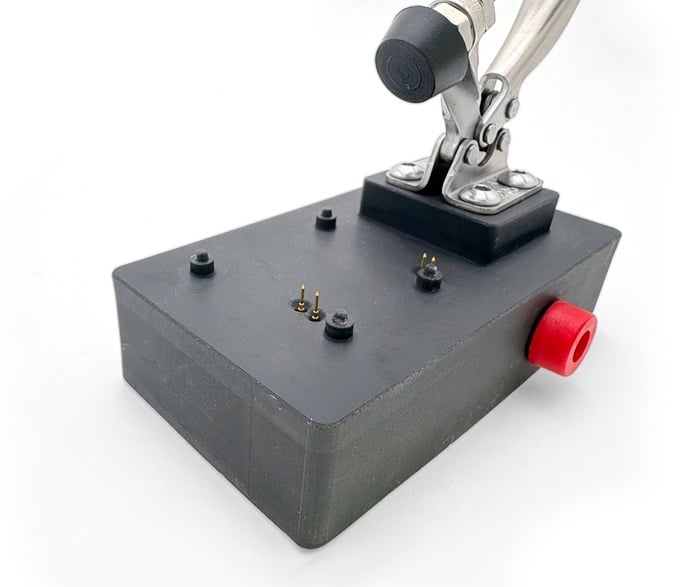 Carbon 3D printing enables accurate mating features for boards and additional hardware.
As an example, we used this resin to produce PCB test fixtures during the development of a haptic device for the Stanford Chariot Program.
EPX 86FR
EPX 86FR is a flame-retardant resin with an unmatched combination of functional toughness, high strength, and long-term stability. It works well in a variety of applications for consumer, automotive and industrial markets that require UL 94 V-0 or FAR 25.853(a) ratings. EPX 86FR is BlueCard certified.
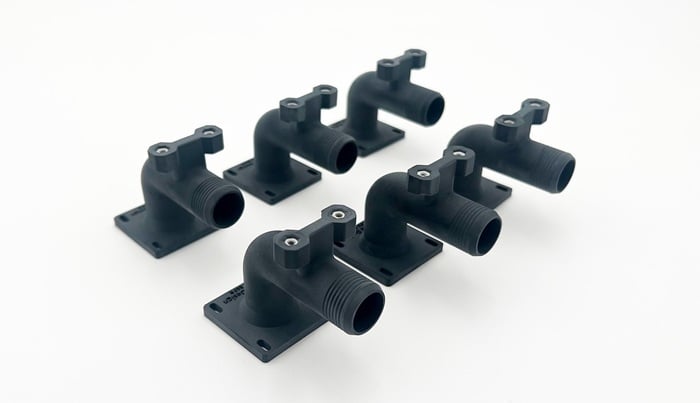 Manifolds for semi-conductor manufacturing equipment.
We have found semiconductor manufacturing components to be the leading application. EPX 86FR meets semiconductor clean-room requirements for V-0, minimal particle release, minimal off-gassing, and cleanability. EPX 86FR is a dual-cure resin available for bulk purchasing, which makes it a great choice for long-term scaled production.
To learn how EPX 86FR is used in semiconductor cleanroom cable management check out the case study, "Fire retardant additive manufactured parts for Semiconductor."
EPX 82
EPX 82 is a high-strength epoxy-based engineering material with excellent long-term durability and mechanical properties comparable to lightly glass-filled thermoplastics (e.g. 20% GF-PBT, 15% GF-Nylon). EPX 82 has a heat deflection temperature ranging from 104°C to 130°C (depending on conditioning) and the functional toughness required for a variety of automotive and industrial applications such as connectors, brackets, and housings.
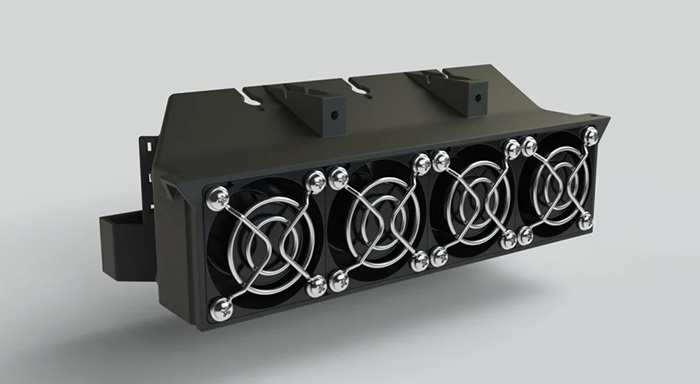 EPX 82 air manifolds for ruggedized power supply cooling
One of our popular applications of EPX 82 is for use in air manifolds for electronics cooling. The geometric freedom of Carbon DLS printing enables designs for compact spaces. Excellent material property retention allows parts to perform in harsh environments for extended periods of time. EPX 82 is a dual-cure resin available for bulk purchasing, which makes it a great choice for long-term scaled production.
To learn how we developed a part for Carbon EPX 82 production, explore this case study Reimagined power supply subsystem design with Carbon DLS
Next Steps
Whether you need rapid prototypes, durable fixtures, or help selecting the right material, our engineering team is here to support you. We are experts in Carbon 3D printing and electrical engineering.
