
The Challenge: Solving Needle Phobia
Fear of needles or “needle phobia” impacts 50 percent to 60 percent of children and contributes to skipping flu shots, blood draws, and other necessary treatments involving needles. *
In an inpatient setting this can be much more acute, as patients may have several procedures a day and the experience can be quite distressing.
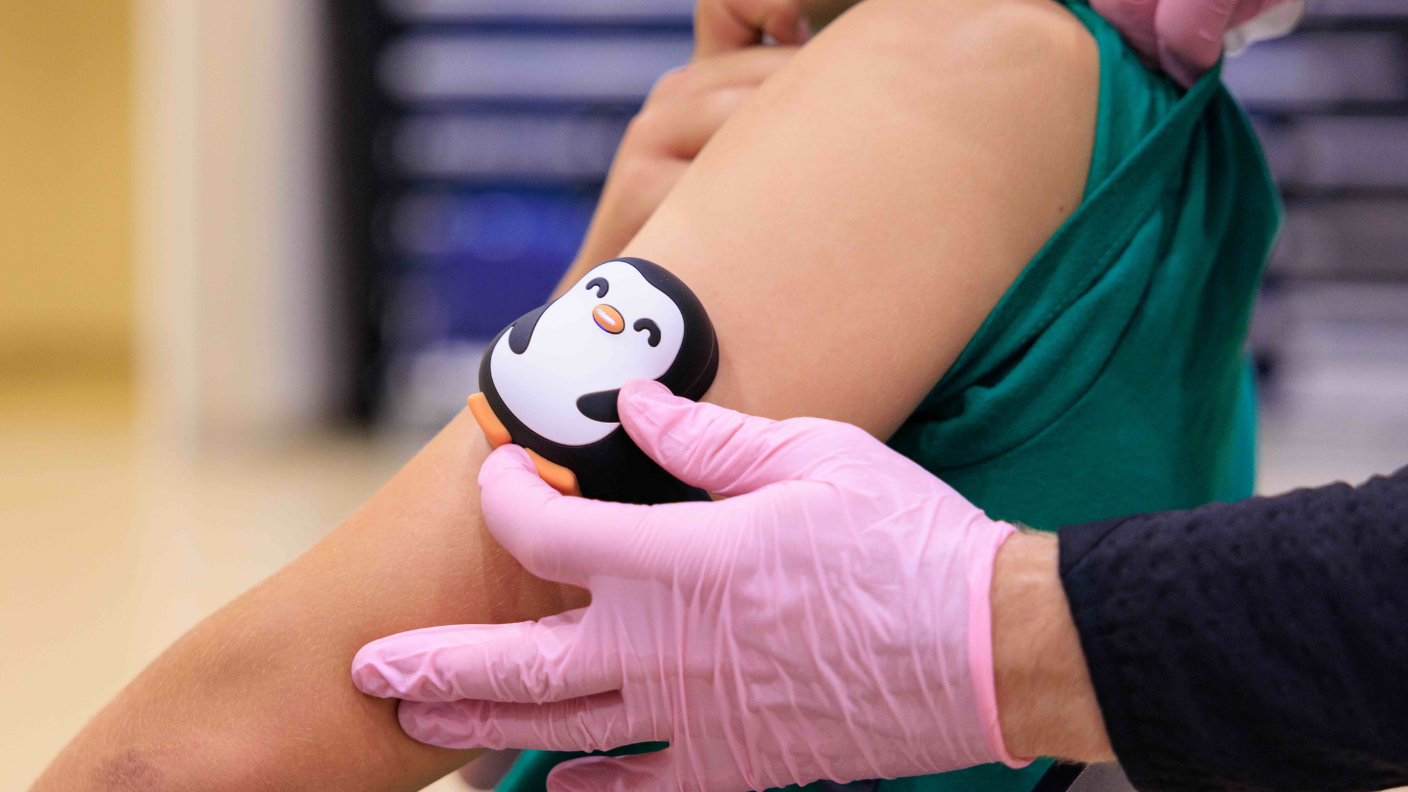
To help solve this challenge, the Stanford Chariot Program wanted to develop a vibrating haptic device to reduce pain and anxiety for common needle procedures. Called “The Buddy Guard," the device would deliver high- frequency vibration to lessen or often eliminate pain patients feel with injections. It would need to be Bluetooth-enabled, so it could pair with tablet-based video games that provide an immersive, captivating distraction.
“The Buddy Guard can make procedures like vaccinations—including flu, COVID, and RSV shots—as well as blood draws, IV placements, and other minor procedures far more comfortable for patients,” said Samuel Rodriguez, MD, pediatric anesthesiologist and co-director of the Chariot Program. “We hope that by easing these experiences early on, we can reduce the risk of long-term fears or phobias related to needles and medical settings and ultimately help support higher vaccination rates throughout life.”
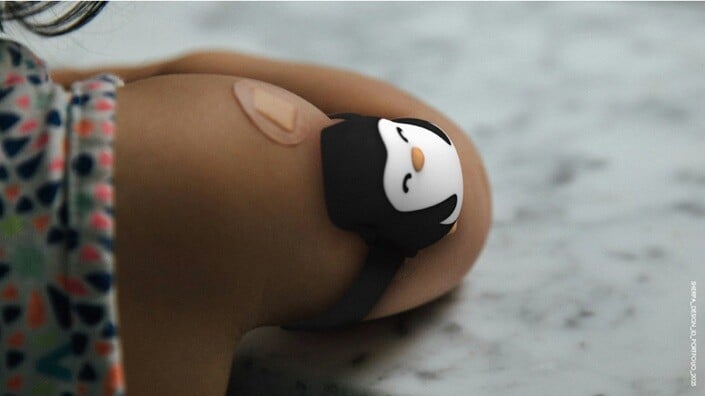 The Buddy Guard on a kids arm (simulated image).
Early Design Work
The Sherpa team went to work designing and building a proof on concept. We sourced a motor with the ability to adjust frequency and amplitude, built a prototype board to control the device, and wrote firmware for it, connecting it to Bluetooth.
The product had to be appealing to the young primary users. For this first iteration, we went with a friendly looking Octopus, utilizing the eyes for control buttons and adding a Velcro strap. We encased the device in a soft outer silicone casing, having printed the enclosure and molds for silicone covers.
Feedback from client
The testing went well, and the feedback on this first interaction was very positive. Stanford had three main change requests: they wanted the device to look like their mascot, which is a penguin. They wanted to try more frequencies, meaning a rethinking of the motor. And, thirdly, they did not like the Velcro strap for attaching the device.
Industrial Design on the Penguin
Making the device look like a Penguin fell to our in-house Industrial Design team. The goal for ID was to make it look like the penguin mascot, while providing a place for a more comfortable strap, buttons, Bluetooth, and keeping it approachable so kids would want to engage with and accept it. This meant anthropomorphizing the penguin design by giving it simple symmetrical cartoon style with rounded features. We compiled pictures of penguins and decided to design using a front view, utilizing the feet for buttons and bringing in the strap at the waist.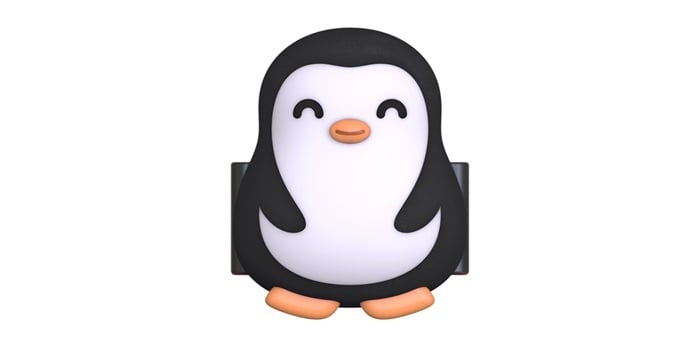 Front-facing penguin design for the Buddy Guard haptic device.
For the strap, we tooled a compression-molded silicone band for attaching the device to a person. We tried a few different durometers to see which would work best for the silicone cover. It needed to feel comfortable, while staying secure – if it is too soft, it would come off, and if it is too hard, it will be uncomfortable.
The Biggest Challenge
The biggest challenge on this project was the Haptic aspect. Stanford supplied us with a lot of research papers around the impact of various frequency and amplitude combinations, but there was conflicting data in the research, and some of the combinations were impossible to achieve. As they did not know what frequency would be most effective for getting the therapeutic response they wanted, we had to develop the device with an amplitude and frequency-adjustable motor.
Getting an acceptable motor was difficult, and involved balancing a battery device that has a wide frequency range. We tested lots of motors, measuring accelerometer data from different motor options.
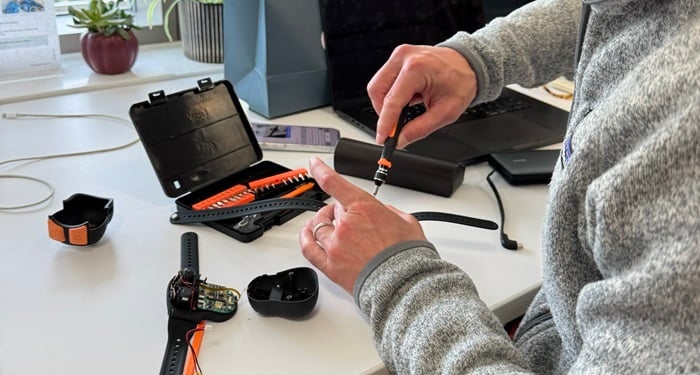 Swapping motors in the Buddy Guard
Our mechanical engineering team dug into ways to increase transfer of the motor vibration to the person – to haptic sensation. The two most promising options were:
- suspending on armature through a soft silicone part to vibrate back and forth
- shaking the whole enclosure
We also explored ways we could shift the frequency in software through modulation. We created a measurement system to convert data to FFT to analyze performance. That involved testing on a dummy block, which represented an arm and seeing how much transfers through at various frequencies and amplitudes. We based these tests on the research papers provided by Stanford.
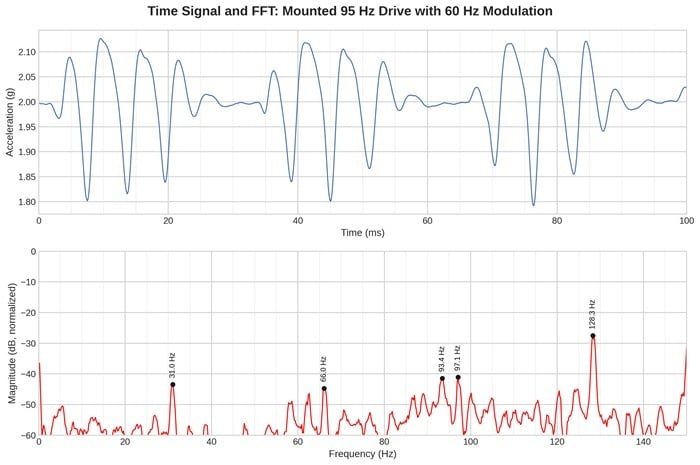 Chart 1. The accelerometer data for candidate motor configuration with frequency modulation. Chart 2. The FFT chart is showing the component frequencies of the waveform.
We performed testing ourselves on skin, using an accelerometer to measure vibrations. We used that data for sorting and down-selecting solutions.
The testing led us to move away from the moving armature in favor of shaking/vibrating the whole thing because it proved to be as effective, but without the complexity.
Ultimately, the chosen motor and controls gave the variables in frequency and amplitude needed for successful testing.
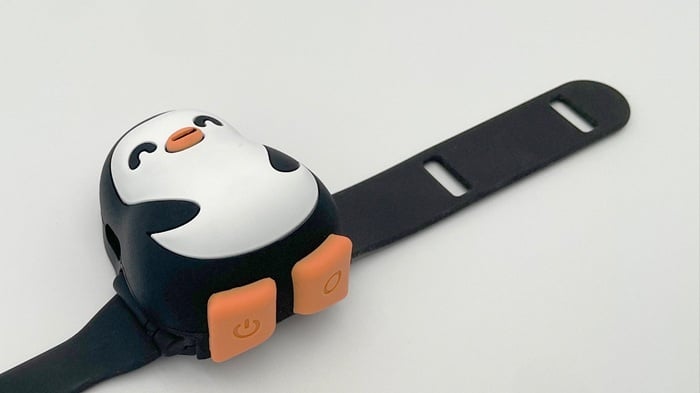 Final Buddy Guard product design with strap
Clinical Trials and Market Success
We made a few finished Penguin prototypes, complete with firmware. The Stanford Chariot Program team was very happy with the new designs and got a small pilot study started using the prototypes. They were able to get Institutional Review Board (IRB) approval for clinical trials, the results of which have been very positive.
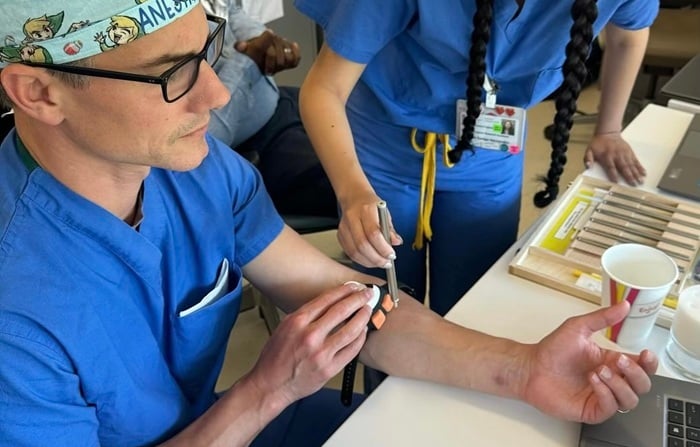 Pinprick testing (used to help determine most effective motor frequencies and waveforms)
“It’s been great to work with the team at Sherpa Design to develop a Bluetooth-enabled haptic device that pairs seamlessly with Chariot’s software,” Rodriguez said. “As we’ve tested the Buddy Guard in clinical settings and trials, the Sherpa team has continuously refined and customized the design based on our findings, resulting in a tool that truly meets the needs of patients and clinicians alike.”
“The beauty of distraction techniques in medicine is that, unlike most medications, they have no side effects,” Rodriguez said. “When the right distraction is paired with the right patient, it can be just as powerful as medication in helping them through stressful or painful procedures.”
Learn more about our engineering product development.

* Orenius, T., LicPsych, Säilä, H., Mikola, K., & Ristolainen, L. (2018, March 14). Fear of injections and needle phobia among children and adolescents: An overview of psychological, behavioral, and contextual factors. SAGE open nursing. https://pmc.ncbi.nlm.nih.gov/articles/PMC7774419/
Learn more about the program at https://healthier.stanfordchildrens.org/en/new-stanford-childrens-device-eases-needle-phobias/amp/