

Wearable technology is one of the most demanding categories in product development. When designing items that rest on someone's face, wrist, or body for extended periods, every gram and millimeter counts. At Sherpa, we've gained critical insights from engineering AR headsets, smart glasses, and other wearables, discovering what truly makes a design succeed. In this article, our team shares key mechanical design principles to help you navigate the complex tradeoffs inherent in wearable design.
Material Selection: Balancing Weight, Strength, and Manufacturability
Users want devices that are lightweight and comfortable, but you also need structural integrity, thermal management, and skin safe surfaces. Material selection in wearables is a balance between these competing requirements. The right choice depends heavily on where you are in the development cycle and use case.
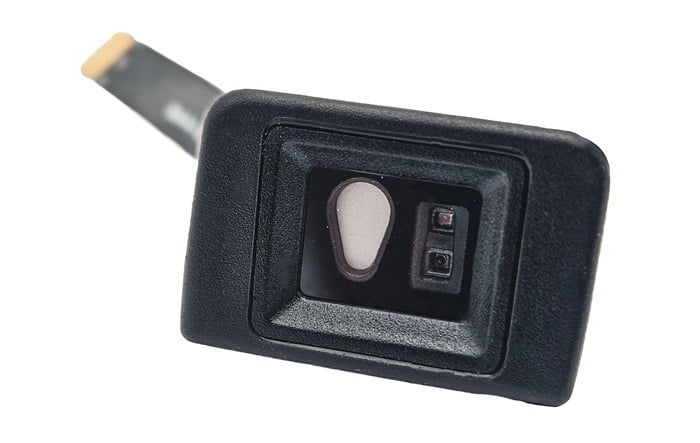 Window and sensor suite used on wearable device
Prototyping Materials
In R&D and early prototyping, speed and flexibility take priority over production manufacturing methods. 3D printing is key at this stage because you can produce parts quickly with multiple design iterations. This lets you focus on validating form factor, ergonomics, and electronics integration without the added complexity of production level manufacturing methods such as machining or injection molding.
There are many types of 3D printing options used with a few outlined here:
Multi Jet Fusion (MJF) with PA12 nylon has become a go-to choice for many wearable prototypes. It's lightweight, has high strength and toughness, and is a quick and cost-effective way to replicate plastic parts with similar robust mechanical needs. The downside is that it has a grainy surface finish without secondary vapor smoothing process.
Carbon DLS printing is another great choice when dimensional accuracy is a priority, and it has a much better surface finish. Material choices using Carbon DLS range from elastomeric to high rigidity material options. RPU 70 provides accuracy close to an injection molded part, including high rigidity as a good approximation of production eyewear materials.
SIL 30 is a silicone urethane, with great biocompatibility, low durometer, and tear resistance used for quick turn pads, cushions, and straps.
When 3D printing cannot achieve specific geometries or materials, 3D printing can be used to make molds for silicone casting. Carbon Loctite resins are single-cure with high accuracy and quick turnaround times, an ideal fit for creating molds. (See Buddy Guard case study)
.jpg?width=700&height=663&name=3d%20cast%20straight%20on%20(1).jpg) Silicone casting molds 3D printed with Carbon Loctite IND 405 Clear
Silicone casting molds 3D printed with Carbon Loctite IND 405 Clear
Direct Metal Laser Sintering (DMLS), 3D printing metal parts, is another option for prototyping materials such as Aluminum, Cobalt Chrome, Stainless Steel, Inconel and Titanium. Keep in mind that prototype materials often have different mechanical properties than your eventual production materials.
Production Material Decisions
When moving toward production, the material conversation shifts significantly. For structural frames in devices like AR glasses, magnesium alloys have emerged as a preferred choice. Magnesium offers an exceptional strength-to-weight ratio and allows for very thin cross-sections which is critical when you're trying to pack electronics into a small form factor. Aluminum provides a good middle ground, being easier to machine than magnesium while still offering reasonable thermal and structural properties.
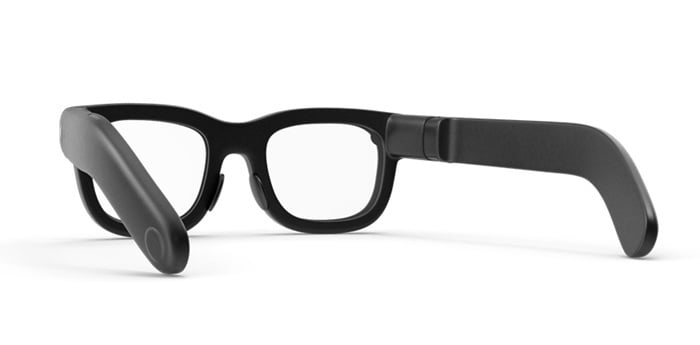 AR Glasses designed to overlay digital content onto the real world.
One important consideration with metals is electronics interaction. If your device includes antennas for wireless connectivity, you'll need to carefully consider material placement. Metals can interfere with RF signals, requiring plastic windows or hybrid constructions in certain areas.
Hybrid approaches are common in production wearables. You might use magnesium for the main structural elements where stiffness is critical, then integrate plastic components where material choice is flexibility or RF transparency is needed. Some designs incorporate magnesium inserts within plastic housings to add localized stiffness without the weight penalty of an all-metal construction.
Ergonomics and Fit: Designing for Human Variability
The human body presents a remarkably challenging design envelope. Heads, hands, and feet vary dramatically in size and shape. What's comfortable for one person may be unbearable for another. Successful wearable design requires understanding where weight can rest, how pressure distributes across contact points, and how long users will realistically wear the device.
A common pitfall here is designing for the 50th percentile person, which often results in a design that fits no one well. Adjustability to 5th and 95th percentile of the target demographic may be very important if you want an adaptable, comfortable design. Although 50th percentile may still be useful as an acceptable starting place, or for placement of non-adjustable components, it should rarely be the sole design target.
This is one area where industrial design goals may conflict with mechanical engineering requirements, making communication between teams critical. (See The Yin and Yang of Product Development)
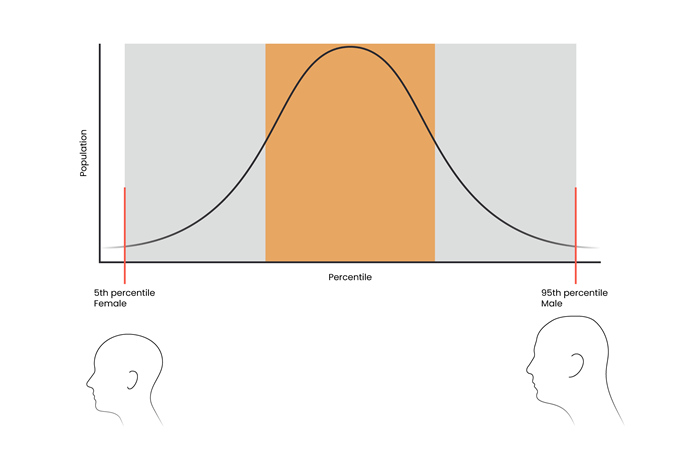 Graph shows by designing a device to fit the extreme ends of the population (for example, the 5th and 95th percentile), it ends up fitting the average better than designing for the 50th percentile.
Weight Distribution and Comfort Windows
Weight targets for wearables are established through systematic wearability studies. These studies place devices of varying weights on test subjects and evaluate comfort over time. The results inform not just total weight targets but also how best weight should be distributed.
For headset-style devices for example, balancing the load is important to prevent neck strain. If the center of gravity of the headset is not coincident with the user's head center of gravity, then an overturning moment is felt by the user that must be compensated by engaging neck muscles. For passive activities this can make a heavier well-balanced headset feel better than a lighter poorly balanced one. However, for dynamic comfort the mass moment of inertia of the headset is also an important property as this represents the rotational resistance felt by the user during dynamic movements. Moment of inertia is the distribution of the mass from its center of gravity (balance point). A high moment of inertia device can feel sluggish and fatiguing during movement even if well balanced. What is comfortable depends on intended use and target demographics.
A device that's comfortable for five minutes might become painful after an hour if weight isn't properly distributed. Research-focused devices that will only be worn for short demonstrations can tolerate higher weights than consumer products intended for all-day use.(See our Case study on The Buddy Guard)
 Vibrating haptic device to reduce pain and anxiety for common needle procedures.
The form factor significantly affects these calculations. Glasses-style devices face tighter weight constraints than headset-style devices because they rely on fewer and smaller contact points. Here the industry has moved toward designs that shift weight away from the nose bridge and toward the temples and head strap, where larger surface areas can better distribute loads. Increasing the distance between support points also allows any off-center mass to be stabilized by lower contact forces.
The Nose Pad Challenge
If you examine different AR products on the market, you'll notice they all have different nose pad designs. That’s because no universal solution exists as nose shapes vary so dramatically across populations. Some devices offer adjustable or interchangeable nose pads, while others try to find a compromise shape that works acceptably for most users.
The mechanical design of nose pads also intersects with electronics packaging. The connection between the nose pad and the main frame needs to accommodate any wiring that runs through that junction while still allowing for adjustment or flex.
Thermal Management Without Fans
Thermal management in compact wearables presents a unique challenge: you need to dissipate heat from processors and other electronics, but you can't use the fans that would be standard in larger devices. There's simply no room, and even if there were, noise and vibrations are distracting, while hot air must be directed away from a user’s face. For a deeper dive into thermal engineering principles and thermal simulation, see our guide on integrating thermal design for efficient product development.
Passive Cooling Strategies
The primary thermal management approach in compact wearables is conduction—moving heat from hot components to larger surface areas where it can dissipate. Thermal paste and thermal pads create low-resistance paths between heat-generating components and heat-spreading structures. When the housing is made of metal, you can design fins directly into structural elements, eliminating the need for separate heat sink components.
Graphite paper and graphite tape have become valuable tools in wearable thermal design. These materials provide excellent in-plane thermal conductivity while adding minimal weight and thickness. They can spread heat across larger areas, preventing hot spots that would otherwise create discomfort or damage. Our article on effective thermal management in optical system packaging covers additional strategies for compact devices.
Touch Temperature Limits
External surface temperatures must remain within safe and comfortable limits which are generally no higher than 40-43°C for skin contact surfaces. This constraint drives thermal design decisions more than internal component limits. A processor might happily operate at 80°C, but if that heat conducts to a surface touching the user, you'll have problems long before the electronics fail.
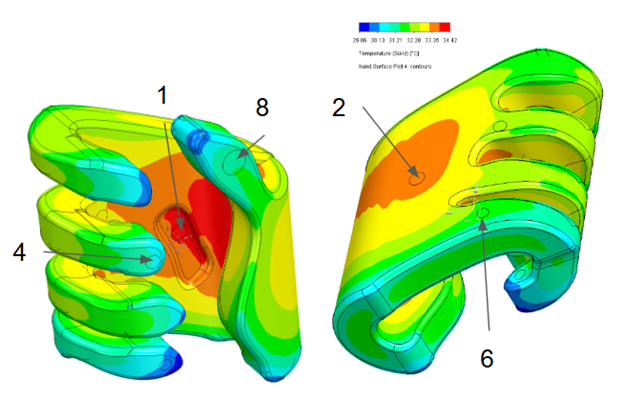 Temperature contour plots for human hand using Pennes modeling technique.
Strategic placement of heat sources helps avoid external hot zones. Where possible, position heat-generating components in locations where the device naturally has some standoff from the skin. Areas of direct pressure contact are the worst places for thermal loads, due to heat transfer to skin and because warmth amplifies the sensation of pressure.
Environmental Sealing and Ingress Protection
Wearable devices encounter sweat, rain, dust, and occasional immersion. The level of environmental protection required depends on the intended use case. Even devices marketed for indoor use need to handle perspiration and cleaning.
Sealing Approaches
IP (Ingress Protection) ratings provide standardized measures of environmental resistance. It uses a two-digit code where the first addresses particle ingress, while the second addresses moisture. Many wearables target IPX4 or higher for water resistance, though the achievable rating depends heavily on the device's mechanical complexity. For detailed guidance on water resistance testing, see our article on design for testing with the IP67.
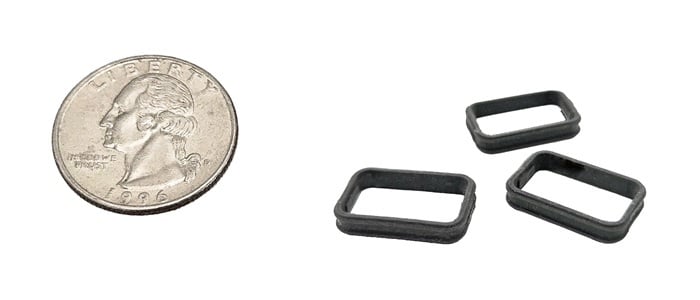 Rubber annular gaskets (1mm wide) used for IPX7 wearable
Sealing strategies range from simple rubber gaskets to robotically dispensed sealants. The choice depends on the geometry of mating surfaces, whether users need to access internal components, and production volume considerations. Robot-dispensed sealants work well for complex, non-standard geometries where die-cut gaskets would be impractical, but they require significant manufacturing infrastructure.
User-serviceable features like replaceable batteries complicate sealing significantly. A permanently sealed device can use adhesives and welding techniques that wouldn't work for a device the user opens regularly. When user access is required, designs typically rely on compression seals and carefully toleranced interfaces that maintain their seal over repeated opening and closing cycles.
Durability and Drop Testing
Wearables get dropped. Glasses fall off faces. Watches slip off wrists. Devices get knocked off tables. Designing for these inevitable impacts requires understanding failure modes and building in appropriate robustness. For devices requiring glass materials, this becomes especially critical.
Simulation Before Physical Testing
FEA (finite element analysis) simulation allows engineers to identify weak points before committing to physical prototypes. By modeling drop impacts from various angles and heights, you can optimize geometry to reduce stress concentrations in critical areas. This iterative simulation work can be more cost effective than building and destroying dozens of prototypes.
Simulation results guide material selection and geometry refinement. If analysis shows a particular location experiencing excessive stress or strain, you might add material there, change the local geometry to spread the load, or select a different material with better impact properties. The nose bridge area in glasses-style devices frequently requires such optimization, as it experiences high loads during face-first drops.
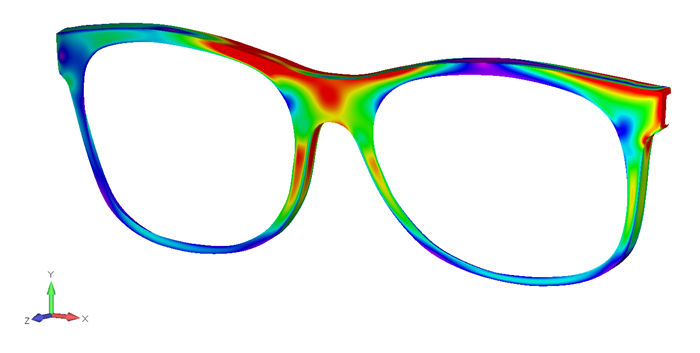 FEA analysis of glasses shows gradient that represents bending stress
Physical Validation
Eventually, simulations must be validated with physical drop testing. Standard approaches involve dropping devices from specified heights onto hard surfaces with controlled orientation to test specific impact scenarios. The goal isn't just survival but understanding how the device fails when pushed beyond its limits. This informs design improvements for the next iteration.
Displays present particular challenges for drop durability. Glass or plastic optical elements are often the most fragile components, and their failure modes differ significantly from structural elements. Protecting these components while maintaining optical quality and minimizing weight requires careful attention to mounting schemes and surrounding geometry.
Packaging Electronics in Constrained Volumes
The electronics in wearables keep getting more capable, but the allowable space is shrinking. Packaging processors, memory, batteries, sensors, and connectivity components into a pair of glasses or a watch demands extremely close collaboration between electrical and mechanical engineering teams.
The Tethered vs. Untethered Decision
One fundamental packaging decision is whether the device must be fully self-contained or can be tethered to external components. Tethering—running a cable to a belt pack or phone—allows you to move batteries, processing, or both out of the devices head-worn portion. This dramatically eases thermal constraints and weight targets for the portion the user actually wears on their head.
Research devices often use tethered configurations because the primary goal is validating the core technology rather than achieving consumer-ready form factors. Production devices trend toward untethered designs for user convenience, but this significantly raises the difficulty of every other packaging design challenge.
Battery Tradeoffs
Battery sizing exemplifies the painful compromises in wearable design. Users want all-day battery life, but batteries are heavy and take up space. The battery large enough for acceptable runtime may push the device over weight targets or crowd out other necessary components. Larger batteries are one way to solve this. Further optimizing power consumption is another. This then becomes a problem for electrical and firmware engineers.
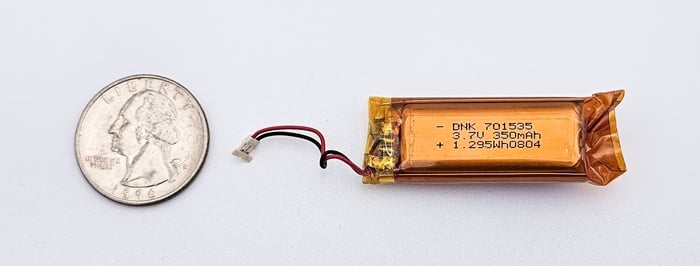 Small Lithium-Ion Battery used in small wearable device
These decisions interact with thermal design as well—batteries generate heat during charging and discharge, and they're sensitive to the heat generated by nearby components. The physical placement of the battery affects both weight distribution and thermal performance and, consequently, charging speed and battery longevity.
Bringing It All Together
Successful wearable design requires consideration of all these factors simultaneously. Material selection affects thermal management. Thermal management affects weight and comfortable wear time. Comfortable wear time affects battery size requirements. Battery size affects weight distribution. Weight distribution affects fit and ergonomics. Everything connects to everything else.
The iterative nature of this work means early decisions constrain later options. The decision process elements matter as much as any specific technical choice which include: starting with realistic targets based on wearability studies, establishing clear priorities among competing requirements, and maintaining flexibility to revisit assumptions as you learn more.
Wearable devices will only become more sophisticated and more demanding as technology matures. The mechanical engineering fundamentals, however, remain consistent: understand your user, respect the physics, and iterate relentlessly. Get those right, and you'll be well-positioned to navigate whatever specific challenges your next wearable project brings.
Looking for engineering support on your wearable device development? Sherpa's design and engineering team brings deep experience across the full product development lifecycle, from early concept prototypes through production-ready designs. Explore our case studies to see examples of our work.
