
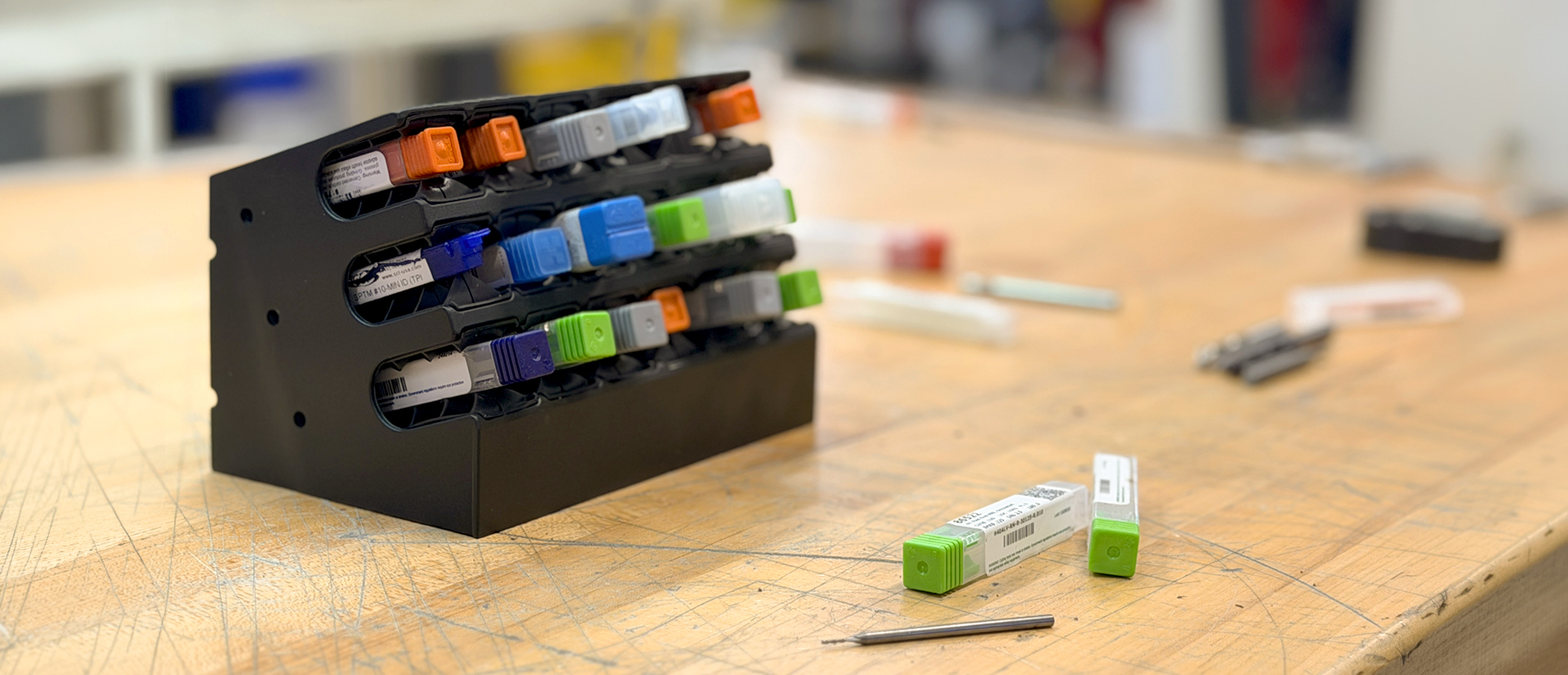
Externs take on Machine Shop tooling organization Challenge
Three Portland high school students spent a week inside Sherpa’s engineering and machine shop environment, taking a real problem from sticky-note concepts to a physical prototype.
For one week in the summer of 2026, three local students stepped into Sherpa Design’s Portland headquarters to experience what engineering work looks like outside the classroom. Finn, a senior at Franklin High School with plans to study mechanical engineering, joined Ohna and Saibee, both rising juniors at Roosevelt High School who are exploring futures in STEM.
The externship was designed as a short, practical introduction to product development. Because Sherpa’s client work often involves confidential engineering projects, the goal was to give students a real design challenge that could be completed in-house, shared openly, and tied directly to the way Sherpa’s engineers and machinists solve problems every day.
The Design Challenge
That challenge came from the machine shop. The team was asked to design a bit and tool holder for CNC machining jobs, addressing a simple but familiar problem: bit cases of different shapes and sizes were difficult to keep organized once projects were underway. The students toured the shop, saw the issue firsthand, and learned that even small workflow problems can create friction in a precision manufacturing environment.
From there, the externs moved into the early stages of design. They brainstormed a wide range of concepts, researched existing organizers and holders, studied the cubby-style box already being used in the shop, and narrowed their ideas into a smaller set of options to model. Using Fusion and CAD skills developed through school, they began translating rough concepts into designed parts.
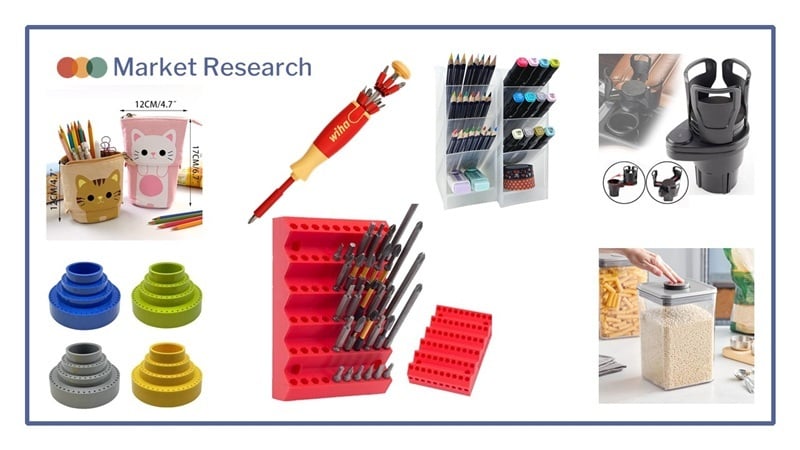 Brainstorming session - concepts in the market
Finn described the assignment as designing “a system that can hold bit cases of all different sizes and shapes that is easily transportable and secure.” That meant solving for more than storage. The holder had to fit the shop’s workflow, keep tooling organized, and be durable enough to use around active machining projects.
One promising early concept used slanted cubbies to let gravity help keep the tool cases secure while still making them visible and accessible.
The team also explored clip inserts as a way to standardize cases of different sizes. By clipping each case into an insert, the design could create a consistent footprint while helping prevent the cases from shifting or falling out.
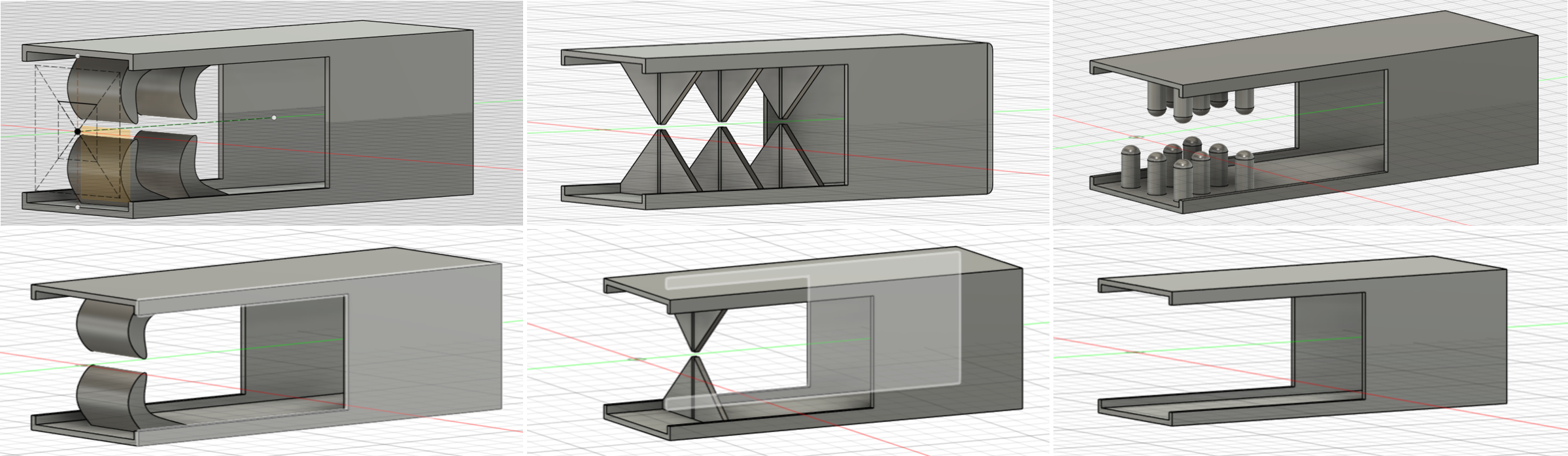
Clip Insert Designs
To refine the design, they created and tested six clip insert styles, printing samples in both soft and extra-soft EPU 46 materials. After comparing how each clip balanced retention and ease of removal, they selected the layered “carwash” style as the best-performing option.
As the week progressed, the students learned that engineering is rarely a straight line from idea to answer. Concepts changed. Details that seemed small on screen became meaningful once the design moved toward a physical object. Parts that looked right in separate files did not always fit together cleanly. Those challenges became part of learning.
Lessons Learned
One of the biggest lessons was learning not to become too attached to an early idea. Ohna summed it up as learning to “remove yourself from it,” because the design is not for you, the designer, but is for the client or user. For the group, that meant accepting feedback, combining pieces of different ideas, and staying flexible as the final concept took shape.
By the end of the week, the project had become more than a tool holder. It was a compact lesson in engineering judgement: keep the solution simple, understand the workload, collaborate early, and expect iteration. “Going from sticky notes to an actual physical thing that you can hold is really cool,” said Saibee. For Finn, the group’s success came not from building three separate ideas, but one shared solution.
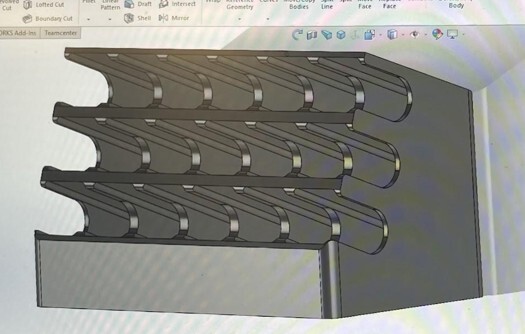 Final car wash design
At the end of the week, the externs presented their process and working prototype to Sherpa employees. With some additional polishing, the design is expected to be used in the machine shop as a practical improvement to the team’s CNC tooling workflow.
For Finn, Ohna, and Saibee, the week provided a window into the realities of engineering: creative problem solving, technical frustration, teamwork, and the satisfaction of seeing a design become real. For Sherpa, it was another opportunity to support the next generation of engineers and designers by giving them a meaningful problem, access to experienced mentors, and a place to learn by doing.
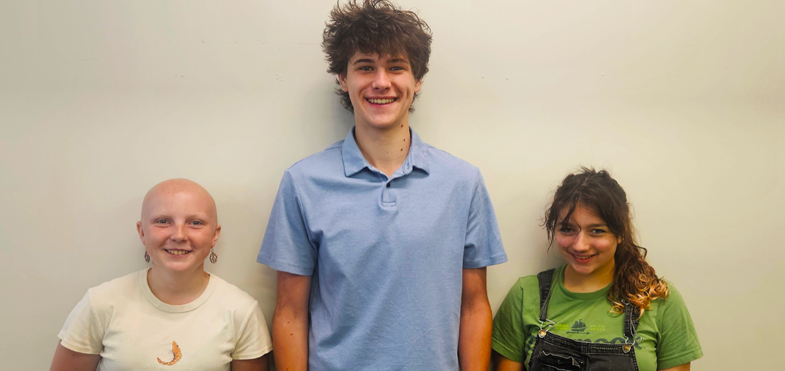 Externs from left to right, Ohna, Finn, and Saibee
Sherpa mentors supporting the externs
-
Tamara Dib, Mechanical Design Engineer, managed the externship
-
Samuel Backes, Lead Industrial Designer, provided design coaching
-
Marco D’Angelo, Senior Mechanical Design Engineer, provided design coaching
-
Tyler Cruz, Additive Manufacturing Technician, advised on Carbon DLS 3D printing
-
Morgan Monte, Prototype Machinist, served as the project’s internal client
-
George Totonchy, IT Systems Administrator, provided technical support throughout the week